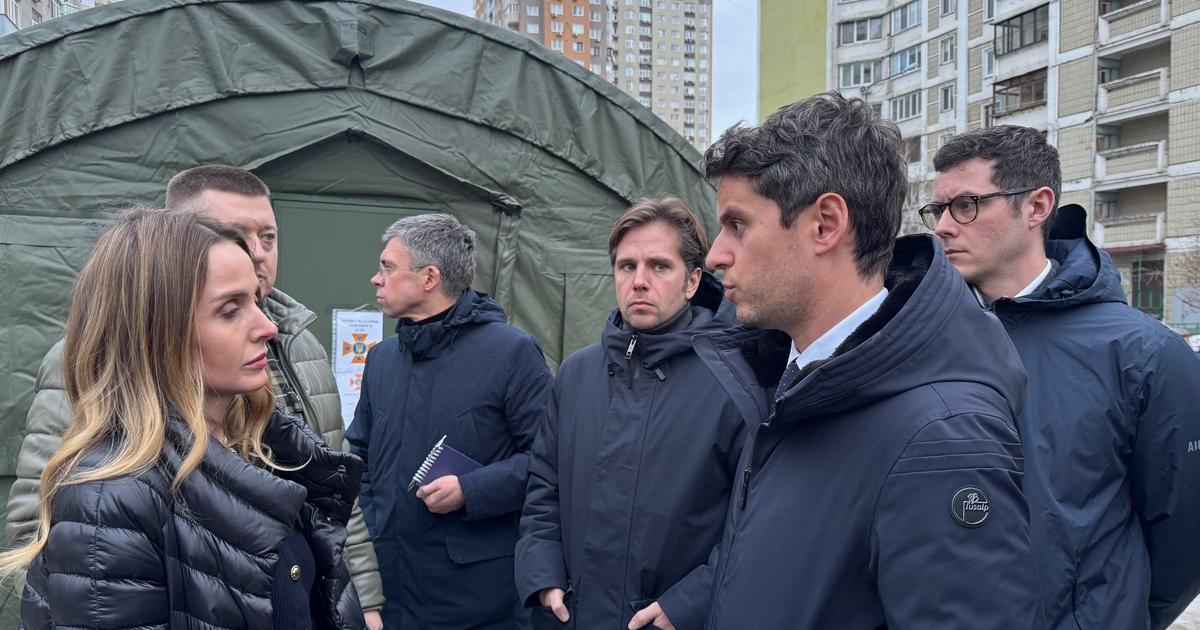
Attal on Ukraine: France Awakens to New European Reality
The geopolitical landscape of Europe is undergoing a profound transformation, and at its heart, France is recalibrating its strategic compass. Under the leadership of figures like Gabriel Attal, who swiftly rose to become the youngest Prime Minister in French history and a prominent voice within President Emmanuel Macron’s centrist party, France is shedding what some describe as a "long sleep" concerning its international posture, especially regarding the war in Ukraine. This awakening signals a fresh, more assertive approach to European security and a re-evaluation of long-standing alliances, marking a pivotal moment in the continent's unfolding narrative.
Gabriel Attal: A New Voice for France's European Strategy
Gabriel Attal's meteoric ascent in French politics has positioned him not just as a domestic reformer but also as a significant player on the international stage. As a key ally of President Macron and a potential successor, Attal is actively shaping France's foreign policy discourse. His international itinerary, including crucial visits to Ukraine, Israel, and later Africa, underscores a deliberate effort to project French influence and engagement globally. This proactive diplomacy is intrinsically linked to his broader vision for a stronger, more resilient France—a vision that encompasses tackling domestic challenges like teenage screen addiction and asserting national values while simultaneously fostering robust international partnerships.
When discussing the conflict in Ukraine, Attal’s clarity and conviction are striking. His perspective, echoed by President Macron, suggests a deep understanding that the struggle for Ukrainian sovereignty is inextricably linked to the security and future of the entire European Union. This isn't merely a regional conflict; it's a test of democratic values against authoritarian expansionism. Attal's repeated emphasis on this connection ensures that the plight of Ukraine remains central to French strategic planning, defining a new era of proactive foreign policy.
"Waking From a Long Sleep": France's Geopolitical Reckoning
The notion of France "waking from a long sleep" is a powerful metaphor frequently invoked by Gabriel Attal himself, particularly in the context of rekindling alliances, such as those with the United Kingdom. This awakening is not a gentle stirring but a forceful emergence, compelled by the undeniable realities of war in Ukraine and the volatile geopolitical landscape, including perceived uncertainties in US commitment to European security. For decades, some might argue, France and other European nations benefited from a relatively stable post-Cold War order, perhaps leading to a degree of strategic complacency. The full-scale invasion of Ukraine shattered this illusion, forcing a harsh reckoning.
Attal's words highlight a fundamental shift in perception: "Many thought the channel would become an ocean. And that all the ties that bound us had to be cut. But we are emerging from this sleep because in some measure we are forced to.” This sentiment extends beyond Franco-British relations to encompass a broader European recalibration. The recognition that Europe must bolster its own defense capabilities, foster strategic autonomy, and strengthen internal cohesion has become paramount. France, with its considerable military and diplomatic weight, sees itself as a natural leader in this endeavor, pushing for greater European self-reliance in security matters. This "awakening" is about reclaiming agency, forging new common purpose, and understanding that the continent's destiny is increasingly in its own hands. It represents a pivot from a reactive stance to a more proactive and self-assured role in global affairs.
The Strategic Shift: France's Potential Role in Ukraine
Perhaps the most significant and debated aspect of France's evolving stance on Ukraine concerns the potential deployment of French troops. While President Macron initially floated the idea, it was Prime Minister **Gabriel Attal on Ukraine** who provided critical clarification and justification, emphasizing the strategic rationale behind such a move. Attal confirmed that any potential deployment would not be aimed at engaging in direct combat operations on the front lines, but rather at providing crucial "rear support." This distinction is vital, aiming to alleviate concerns about direct confrontation with Russia while still signaling a firm commitment to Ukraine's defense.
The specific roles envisioned for French forces underscore this non-combatant support. Attal articulated three primary areas:
- Military Training: French personnel could provide advanced training to Ukrainian forces, equipping them with the skills necessary to operate modern Western equipment and adopt new tactical doctrines. This capability building is essential for Ukraine's long-term defense.
- Air Defense: Deploying French assets to enhance Ukraine's air defense capabilities would help protect critical infrastructure and civilian populations from Russian missile and drone attacks. This would free up Ukrainian air defense assets for front-line duties.
- Border Protection: French troops could be tasked with securing specific sections of Ukraine's borders, potentially with Belarus or non-frontline areas with Russia, thereby releasing Ukrainian soldiers for deployment where they are most needed.
Attal's rationale is clear and stark: "The struggle of Ukrainians is our struggle as well. Because fighting for 2 years for the integrity of their territory, they are also fighting for the security of the European Union and France, since dictators do not go on vacation. And if Ukraine falls, the front line will inevitably move to the west." This statement underlines the direct threat to European security posed by an unchecked Russia and positions French involvement as a matter of national self-preservation. For a deeper understanding of these strategic considerations, you can read more about
Gabriel Attal Explains France's Strategic Ukraine Troop Plan and the detailed rear support roles in
French Troops in Ukraine: Attal Details Rear Support Roles.
Navigating Alliance Dynamics and Strategic Ambiguity
While the prospect of French troop deployment in Ukraine has generated considerable debate, it’s crucial to understand the strategic context and the diplomatic tightrope France is walking. French Senator Cédric Perrin highlighted the critical importance of consultation with NATO allies. He warned that "we cannot improvise on such a topic without consulting our allies. These manipulations isolate us and force our allies to distance themselves." This perspective underscores the delicate balance between France's desire for strategic autonomy and the imperative of maintaining alliance cohesion, particularly within NATO. Any significant military deployment would require careful coordination to avoid fragmentation and ensure a unified Western front against Russian aggression.
Despite these concerns, the discussion itself serves a strategic purpose: to foster "strategic ambiguity." This concept involves deliberately leaving an adversary uncertain about potential responses, thereby keeping them guessing and potentially deterring further escalation. By refusing to rule out options, Western nations like France can project a stronger resolve and signal to Russia that all possibilities remain on the table. This is not about making concrete plans today but about influencing Moscow’s calculations for tomorrow.
In this high-stakes geopolitical chess game, France aims to demonstrate that Western nations are prepared to take decisive action if necessary, moving beyond mere verbal condemnation to tangible, if non-combat, support. The message to Russia is that the West’s commitment to Ukraine is not wavering, and the consequences of further aggression could be far more extensive than anticipated. This nuanced approach seeks to maximize deterrence without provoking an immediate, direct military confrontation.
Conclusion
The statements and actions championed by Gabriel Attal reflect a France that is actively recalibrating its role in a challenging new European reality. From revitalizing long-standing alliances to contemplating unprecedented forms of support for Ukraine, Paris is demonstrating a heightened sense of urgency and strategic purpose. The "long sleep" is over, replaced by a clear-eyed assessment of threats and a proactive pursuit of European security interests. While the path ahead is complex, fraught with diplomatic intricacies and the need for unwavering alliance cohesion, the commitment articulated by **Gabriel Attal on Ukraine** underscores a significant and enduring pivot in French foreign policy—a pivot that could shape the future trajectory of the European continent for decades to come. As France steps into this more assertive role, its leadership will be critical in forging a collective European response to the formidable challenges that lie ahead.