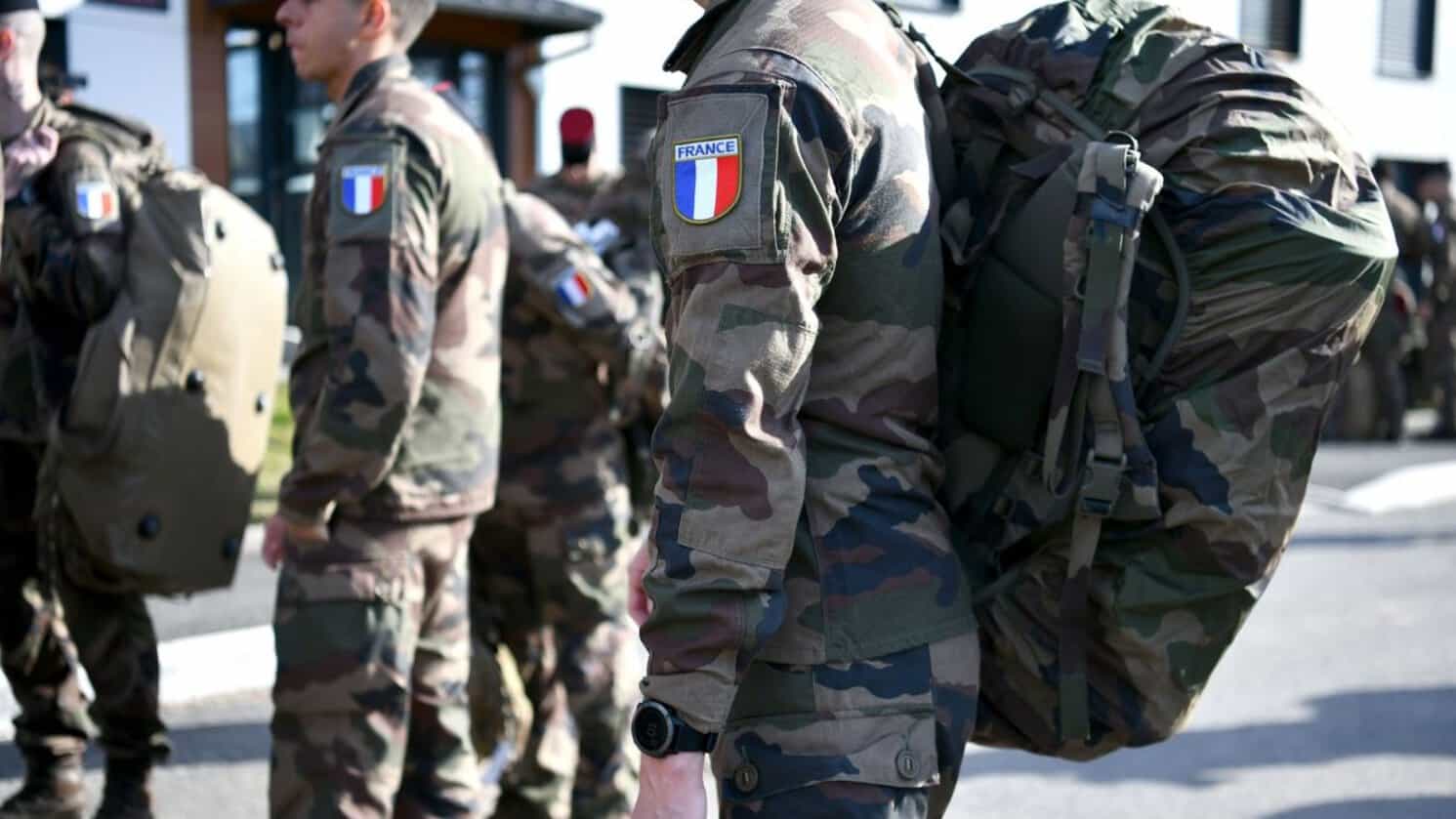
French Troops in Ukraine: Attal Details Rear Support Roles Amid Shifting European Landscape
The possibility of French troops deploying to Ukraine has ignited considerable debate and speculation across Europe. At the heart of this discussion is French Prime Minister Gabriel Attal, who has provided crucial clarity on the potential nature and purpose of such an intervention. Far from frontline combat, Attal emphasizes that any French military presence would be strictly for rear support roles, aimed at bolstering Ukraine's defense capabilities and, by extension, safeguarding European security. This strategic clarification underscores a significant evolution in France's approach to the conflict, reflecting a broader European awakening to new geopolitical realities. The French government's posture, articulated by Gabriel Attal on Ukraine, highlights a proactive stance designed to deter further Russian aggression and reinforce the continent's collective defense.
Attal's recent statements echo and expand upon earlier remarks by President Emmanuel Macron, signaling a unified and resolute French position. As France navigates its role as a leading power within the European Union, its commitment to Ukraine's sovereignty and territorial integrity is increasingly framed as a direct imperative for its own security. This article delves into the specifics of Attal's proposal, the strategic rationale driving it, the diplomatic complexities involved, and how it fits into Gabriel Attal's broader vision for France's international engagement.
Gabriel Attal on France's Evolving Stance: Defining Rear Support Missions
In a direct response to the ongoing conflict, French Prime Minister Gabriel Attal has articulated a clear vision for potential French military involvement in Ukraine. He confirmed that while the deployment of troops is a point of discussion, their purpose would be distinctly non-combative at the front lines. Instead, these forces would be dedicated to essential rear support functions, directly contributing to Ukraine's long-term resilience and defense capacity. This careful delineation of roles is critical to understanding France's strategic intent.
Attal specified several key areas where French troops could make a significant difference:
- Military Training: Providing advanced training to Ukrainian forces within Ukraine, potentially closer to operational zones but away from active combat. This would allow for more efficient and tailored instruction, adapting to the evolving needs of the battlefield without exposing French personnel to direct conflict.
- Air Defense: Operating and maintaining sophisticated air defense systems to protect critical infrastructure, cities, and strategic assets from Russian missile and drone attacks. This would free up Ukrainian personnel and resources for frontline duties.
- Border Protection: Assisting in the protection of certain parts of Ukraine's borders, particularly those less exposed to direct Russian aggression, thereby allowing Ukrainian troops to be redeployed to more active sectors of the front.
This approach highlights a nuanced strategy by France. Rather than direct engagement in hostilities, the focus is on enabling Ukraine to strengthen its own defenses and maintain its operational capacity. For Gabriel Attal, Ukraine represents a critical front in the defense of broader European stability. This strategic clarity aims to provide substantial, tangible support while managing the risks of escalation.
The detailed explanation of potential rear support roles demonstrates a calculated move to provide meaningful assistance. This could range from instructing new recruits on advanced weaponry to manning crucial defensive installations, all without directly engaging in the combat operations that have defined the conflict thus far. Such a presence would not only offer practical military advantages but also send a powerful political signal of unwavering commitment.
The Rationale Behind Rear Support: Safeguarding European Security
At the heart of French Prime Minister Gabriel Attal's advocacy for potential troop deployment in Ukraine lies a profound understanding of European security. Attal passionately argues that "the struggle of Ukrainians is our struggle as well." This sentiment is not merely an expression of solidarity but a pragmatic assessment of the geopolitical landscape. His core message is stark: if Ukraine falls, the consequences for the European Union and France would be dire, as "dictators do not go on vacation."
This perspective underscores a critical domino effect:
- Direct Threat to EU Borders: Should Ukraine falter, the frontline of conflict would inevitably shift westward, directly threatening the borders of NATO and EU member states. This scenario would dramatically increase defense expenditures, destabilize regional economies, and expose millions of Europeans to direct security threats.
- Erosion of International Norms: An unchallenged Russian victory in Ukraine would signal that territorial aggression and the violation of international law can go unpunished. This would empower other authoritarian regimes globally, undermining the principles of sovereignty and self-determination that underpin the liberal international order.
- Long-Term Instability: The immediate security implications extend to long-term instability. The refugee crisis would intensify, economic ties would be severed, and a new era of Cold War-style tensions would descend upon the continent, far more perilous given modern weaponry.
Attal's warning about the "front line moving west" serves as a powerful call to action, emphasizing that proactive support for Ukraine is a form of self-defense for France and Europe. This strategic thinking aligns with a growing consensus that European nations must take greater responsibility for their own defense, particularly in an era of evolving global alliances. France, under President Macron and Prime Minister Attal, is positioning itself to lead this charge, advocating for robust responses that prevent future conflicts by decisively addressing current ones.
This commitment is not limited to rhetorical support. It stems from a deep conviction that investing in Ukraine's security today is less costly than confronting an emboldened aggressor tomorrow. For more insights into France's detailed strategy, read Gabriel Attal Explains France's Strategic Ukraine Troop Plan.
Strategic Ambiguity and Alliance Consultation: Navigating the Diplomatic Tightrope
While the prospect of French troops in Ukraine signals a stronger resolve, it also navigates a complex diplomatic landscape. The concept of "strategic ambiguity" is central to this discussion. French Senator Cédric Perrin highlighted that the possibility of troop deployment, even without immediate specific plans, serves as a crucial tool to show Russia that Western countries are ready to take decisive action. This ambiguity aims to keep adversaries guessing, potentially deterring further aggression by leaving open a range of responses. It's a psychological gambit as much as a military one.
However, Perrin also emphasized the critical importance of consultation with NATO allies. "We cannot improvise on such a topic without consulting our allies," he stated, warning that unilateral actions could isolate France and reduce its credibility. This underscores several key considerations:
- Maintaining NATO Unity: Any significant military deployment by a NATO member in a conflict zone like Ukraine needs careful coordination to avoid fracturing the alliance. A unified front sends a stronger message to potential adversaries and ensures collective security guarantees remain robust.
- Risk of Escalation: Uncoordinated moves could be misinterpreted, potentially escalating tensions rather than de-escalating them. Collaborative decision-making helps to manage and mitigate such risks.
- Shared Burden and Responsibility: While France seeks to lead, the burden of supporting Ukraine and deterring Russia is a shared one. Consulting allies ensures that responses are proportionate, effective, and broadly supported.
The tension between strategic ambiguity – maintaining flexibility in response – and the need for allied consultation is a delicate balance. France aims to signal strength and resolve without undermining the cohesion of its partnerships. This diplomatic tightrope walk is essential for ensuring that any French action is both impactful and integrated within a broader, concerted international effort.
Gabriel Attal's Broader Vision: France's Reawakening and International Engagement
Beyond the immediate considerations of military support for Ukraine, Gabriel Attal's statements reflect a broader vision for France's role on the international stage and within Europe. His comment about France and the UK "waking from a long sleep" in their relationship is indicative of a re-evaluation of alliances and strategic partnerships in the face of global turmoil. The war in Ukraine and the shifting dynamics in the US have forced European nations to reconsider their reliance on existing structures and embrace new forms of cooperation.
Attal's burgeoning international profile, marked by visits to Ukraine, Israel, and planned trips to Africa, positions him as a significant player in shaping France's foreign policy future. As a potential successor to President Macron, he is actively laying the groundwork for leadership, advocating for a more assertive and strategically independent France. This involves:
- Strengthening European Autonomy: Advocating for Europe to take greater charge of its own security and defense, reducing dependency on external powers.
- Reforming Alliances: While committed to NATO, exploring ways to enhance bilateral and multilateral European defense cooperation outside traditional frameworks.
- Global Leadership: Projecting French influence beyond Europe, particularly in critical regions like Africa, to address shared challenges and promote stability.
This reawakening is not just about military readiness; it's about a comprehensive approach to sovereignty, economic resilience, and diplomatic clout. The crisis in Ukraine serves as a catalyst for this strategic shift, compelling France to define its interests and responsibilities more sharply. Attal's leadership embodies this new direction, emphasizing decisive action and renewed alliances. For more on how France is adapting to these new realities, explore Attal on Ukraine: France Awakens to New European Reality.
Practical Implications and Future Outlook
While the discussion around French troops in Ukraine remains largely hypothetical in terms of specific deployment plans, the practical implications of such a move, even in rear support roles, are significant. Logistically, it would require careful planning for troop deployment, supply chains, security protocols, and integration with Ukrainian forces. Politically, it signifies a deeper commitment from a major European power, potentially encouraging other nations to re-evaluate their own contributions.
It's important to remember that the current consensus among the 27 EU states remains focused on supporting Ukraine primarily with weapons and equipment. Any troop deployment, even for training or defense, would be a major qualitative shift. The focus on rear support roles is a calculated effort to provide crucial assistance without directly crossing the line into combatant status, which could trigger broader escalation. For Ukraine, such support would be invaluable, freeing up its own forces for the front lines and enhancing its overall defensive capabilities.
Tips for Understanding the Evolving Landscape:
- Monitor Allied Consultations: Keep an eye on statements from NATO, the EU, and individual member states regarding coordinated military support for Ukraine.
- Differentiate Roles: Understand the crucial distinction between combat roles and rear support roles, and how this impacts geopolitical risk.
- Contextualize French Intent: Recognize France's ambition to be a leading European defense power and how its actions in Ukraine align with this long-term strategy.
The situation remains fluid, but the pronouncements by Gabriel Attal regarding Ukraine undeniably mark a pivotal moment in the European response to ongoing aggression. The emphasis on training, air defense, and border protection highlights a strategy of strengthening Ukraine from within, rather than engaging in direct confrontation, all while projecting a firm stance against expansionism.
Conclusion
French Prime Minister Gabriel Attal's detailed explanation of potential French troop deployment in Ukraine underscores a crucial shift in European strategy. By emphasizing rear support roles—such as training, air defense, and border protection—Attal frames any intervention as a defensive measure designed to bolster Ukrainian resilience and, by extension, secure the broader European Union. This approach, while carefully navigating the complexities of strategic ambiguity and essential allied consultation, reflects a robust commitment to preventing the eastward creep of conflict. The rationale is clear: Ukraine's struggle is intrinsically linked to European stability, and proactive support today is an investment in future security. As Gabriel Attal on Ukraine continues to shape France's international posture, his vision highlights a Europe "waking from a long sleep," ready to assume greater responsibility for its own defense and forge stronger alliances in a turbulent world. This measured yet resolute stance from Paris aims to provide decisive, tangible support to Kyiv, signaling to all that the defense of sovereignty and democratic values remains a top priority.