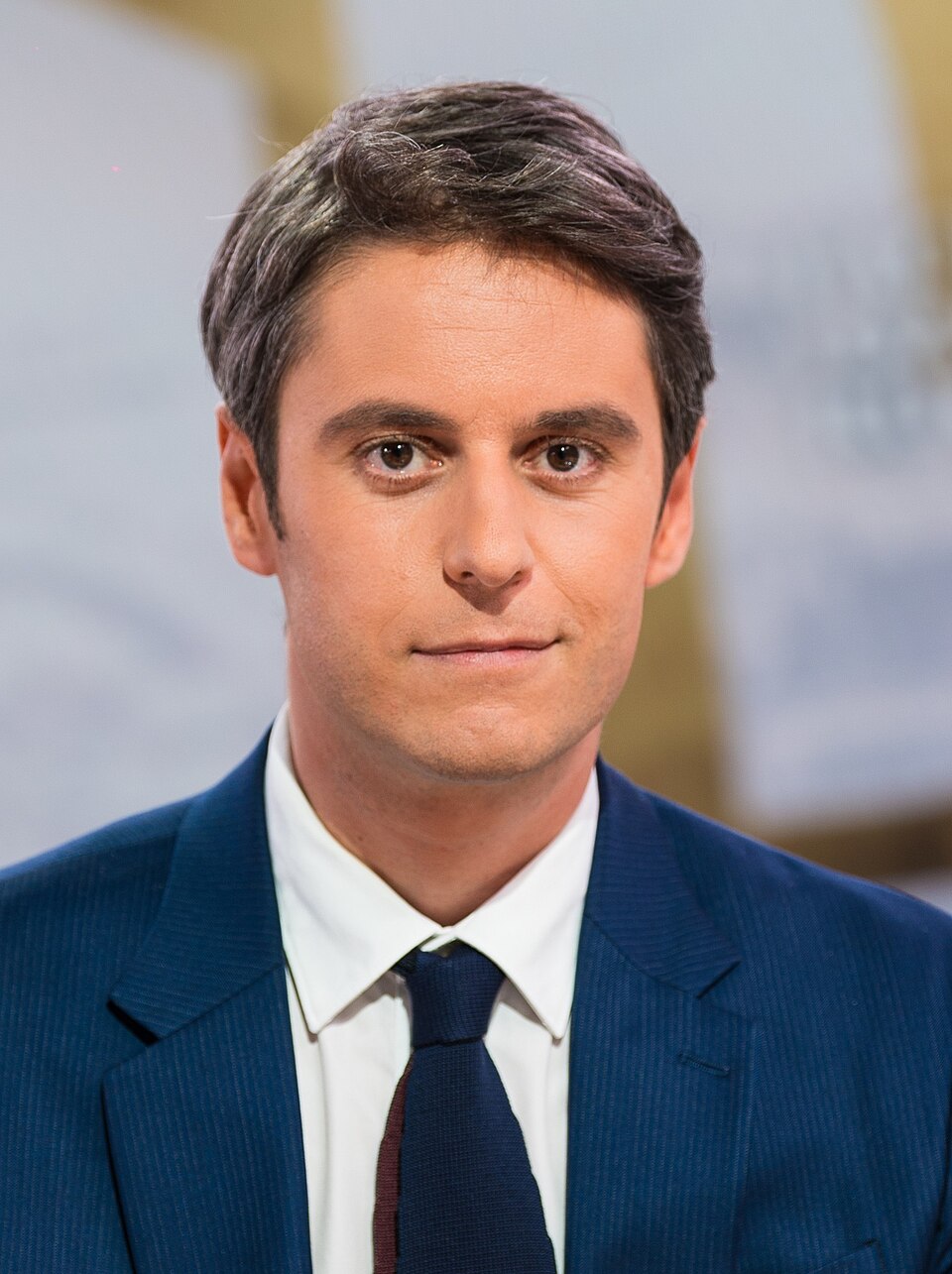
In a period marked by profound geopolitical shifts and escalating tensions in Eastern Europe, French Prime Minister Gabriel Attal has emerged as a pivotal voice, articulating France's evolving and increasingly assertive stance on the conflict in Ukraine. His recent statements have provided crucial clarity regarding France's potential strategic troop deployments, moving beyond mere rhetoric to detail the practical implications and underlying motivations. Attal’s explanations underscore a significant recalibration of French foreign policy, positioning the nation not just as a supporter of Kyiv, but as a proactive guardian of European security. The discussions surrounding Gabriel Attal Ukraine strategy reflect a broader awakening within Europe to the enduring threat posed by Russian aggression.
France's Strategic Imperative: Why Ukraine's Fight is Europe's Fight
Gabriel Attal’s discourse on Ukraine transcends simple solidarity; it frames the conflict as an existential struggle for the European Union and, indeed, for France itself. Drawing a stark line, Attal emphatically declared, "The struggle of Ukrainians is our struggle as well. Because fighting for 2 years for the integrity of their territory, they are also fighting for the security of the European Union and France, since dictators do not go on vacation. And if Ukraine falls, the front line will inevitably move to the west." This powerful assertion highlights a fundamental shift in European thinking, where the defense of Ukraine's borders is inextricably linked to the preservation of peace and stability across the continent.
This perspective is not merely a moral stance but a pragmatic acknowledgment of geopolitical realities. For too long, some European nations may have viewed the conflict as a distant problem, but Attal’s words serve as a potent reminder that unchecked aggression rarely contains itself. The implication is clear: allowing Ukraine to fall would not only embolden revisionist powers but would directly threaten the territorial integrity and security of EU member states. France, under President Macron and with Attal as a leading voice, is advocating for a proactive deterrence strategy, understanding that defensive lines are best held far from home borders. This strategic imperative forms the bedrock of Gabriel Attal's Ukraine policy.
The "long sleep" Attal referenced in another context—referring to France and the UK's relationship—can be extended to a broader European context concerning security. The war in Ukraine has jolted Europe awake, forcing a re-evaluation of alliances and defense postures. France's increasingly vocal and assertive role is a testament to this awakening, signaling a readiness to shoulder greater responsibility for continental security, even if it entails considering unprecedented measures like troop deployments. This more robust stance underscores a recognition that the cost of inaction far outweighs the risks of decisive engagement.
Defining the Scope: Rear Support, Training, and Air Defense
Crucially, Prime Minister Attal has been meticulous in clarifying the nature of any potential French troop deployment in Ukraine. He has unequivocally stated that such actions would not be aimed at participating in combat operations at the front line. Instead, the focus would be on critical rear support functions. This distinction is vital, as it seeks to provide robust assistance without directly drawing France into a full-scale armed conflict with Russia, a scenario most NATO allies are eager to avoid.
Attal detailed several specific roles for these potential deployments:
- Military Training: French forces could provide advanced training to Ukrainian military personnel, enhancing their skills and tactical capabilities. This transfer of expertise is invaluable, ensuring Ukrainian soldiers are equipped with the latest techniques and knowledge to defend their nation effectively.
- Air Defense: Deploying French units to provide air defense capabilities would be a significant boost to Ukraine's protection against missile and drone attacks. This could involve operating sophisticated air defense systems in specific areas, safeguarding critical infrastructure, and protecting civilian populations.
- Border Protection: Assisting with the protection of certain parts of Ukraine's border would free up Ukrainian forces currently assigned to these tasks, allowing them to be redeployed to more active front lines. This strategic reallocation of resources could significantly impact the course of the conflict.
These roles fall squarely within the domain of logistical, technical, and training support, providing a lifeline to Ukraine while maintaining a clear red line against direct engagement in front-line combat. This nuanced approach allows France to offer substantial aid, bolstering Ukraine's resilience and operational capacity without escalating the conflict into a direct NATO-Russia confrontation. For more detailed insights into these specific roles, readers can refer to French Troops in Ukraine: Attal Details Rear Support Roles.
By focusing on rear support, France can help establish a more secure operational environment within Ukraine, enabling Kyiv to sustain its defense efforts more effectively. This could involve everything from logistics and maintenance hubs to medical support and engineering assistance, all of which are crucial for a long-term conflict. The strategic value lies in strengthening Ukraine's capacity to fight on its own terms, backed by sophisticated Western support.
Strategic Ambiguity and the Importance of Allied Consensus
The discussion around troop deployment is not just about practical assistance; it's also a significant component of strategic communication. French Senator Cédric Perrin highlighted the importance of this concept, noting that the possibility of deployment should be part of a policy of strategic ambiguity. The goal here is to keep Russia guessing, to demonstrate that Western countries are prepared to take decisive action if necessary, without laying out specific plans that an adversary could exploit. This deliberate vagueness is a tool of deterrence, aiming to create uncertainty in Moscow and influence its strategic calculus.
However, Perrin also issued a crucial caveat: any decision regarding troop deployment must be made in close consultation with NATO allies. "We cannot improvise on such a topic without consulting our allies. These manipulations isolate us and force our allies to distance themselves," he emphasized. This highlights a fundamental tension between national assertiveness and alliance cohesion. While France may wish to project strength and resolve, doing so unilaterally without broader consensus risks alienating key partners and undermining the collective security framework of NATO.
The credibility of such a policy hinges on demonstrating unity and shared purpose among allies. If individual nations act without coordination, it can create fissures that adversaries might exploit. Therefore, while the idea of strategic ambiguity is potent, its execution requires delicate diplomatic footwork. It necessitates continuous dialogue, transparency, and a shared understanding of the risks and rewards among all relevant stakeholders.
From an analytical standpoint, France’s more assertive posture, championed by figures like Gabriel Attal, is indicative of a broader transformation within European foreign policy. The "waking from a long sleep" phrase encapsulates not just renewed bilateral ties with the UK, but a wider re-evaluation of Europe's geopolitical role in a more dangerous world. This is a critical development for European security, signaling a potential shift towards greater self-reliance and strategic autonomy. For a deeper look into this evolving European reality, consider reading Attal on Ukraine: France Awakens to New European Reality.
Gabriel Attal's Broader Vision and Political Ascent
Beyond the immediate crisis in Ukraine, Gabriel Attal's pronouncements are also situated within his burgeoning political career and his aspiration to lead France's centrist party. As a potential successor to President Macron, Attal is actively shaping his profile on both the domestic and international stages. His visits to Ukraine, Israel, and planned trips to Africa are not just diplomatic missions; they are also strategic moves to demonstrate his leadership capabilities and global vision.
His broader agenda, which includes tackling teenage screen addiction and banning headscarves for girls under 15, reveals a leader keen on addressing contemporary societal challenges. However, it is his robust stance on international affairs, particularly Ukraine, that defines his assertive foreign policy vision. By engaging directly with critical global issues, Attal positions himself as a decisive figure ready to confront complex challenges head-on.
This emerging leadership is crucial for France as it navigates a complex world. Attal's willingness to articulate a bold, proactive foreign policy, even when it challenges conventional wisdom, suggests a future French leadership that will be increasingly influential in shaping European and global responses to crises. His focus on strengthening alliances, like the renewed relationship with the UK, underscores a pragmatic approach to securing France's interests in a multipolar world.
Conclusion
Gabriel Attal’s detailed explanation of France's strategic Ukraine troop plan marks a significant moment in European foreign policy. By distinguishing between direct combat and crucial rear support roles – such as training, air defense, and border protection – Attal clarifies a nuanced but firm commitment to Ukraine's sovereignty and, by extension, to European security. His statements underline the belief that Ukraine's struggle is inseparable from the security of the European Union, emphasizing that unchecked aggression will inevitably move westward. While advocating for bold action, Attal and French officials also stress the vital importance of allied consultation and strategic ambiguity to effectively deter and manage geopolitical risks. As Gabriel Attal continues to solidify his position as a key political figure, France's evolving stance on Ukraine signals a new era of assertive engagement aimed at safeguarding continental stability and projecting a stronger, more unified European front.